
 Image 1 of 1
The Years (1937) and the Streets of London
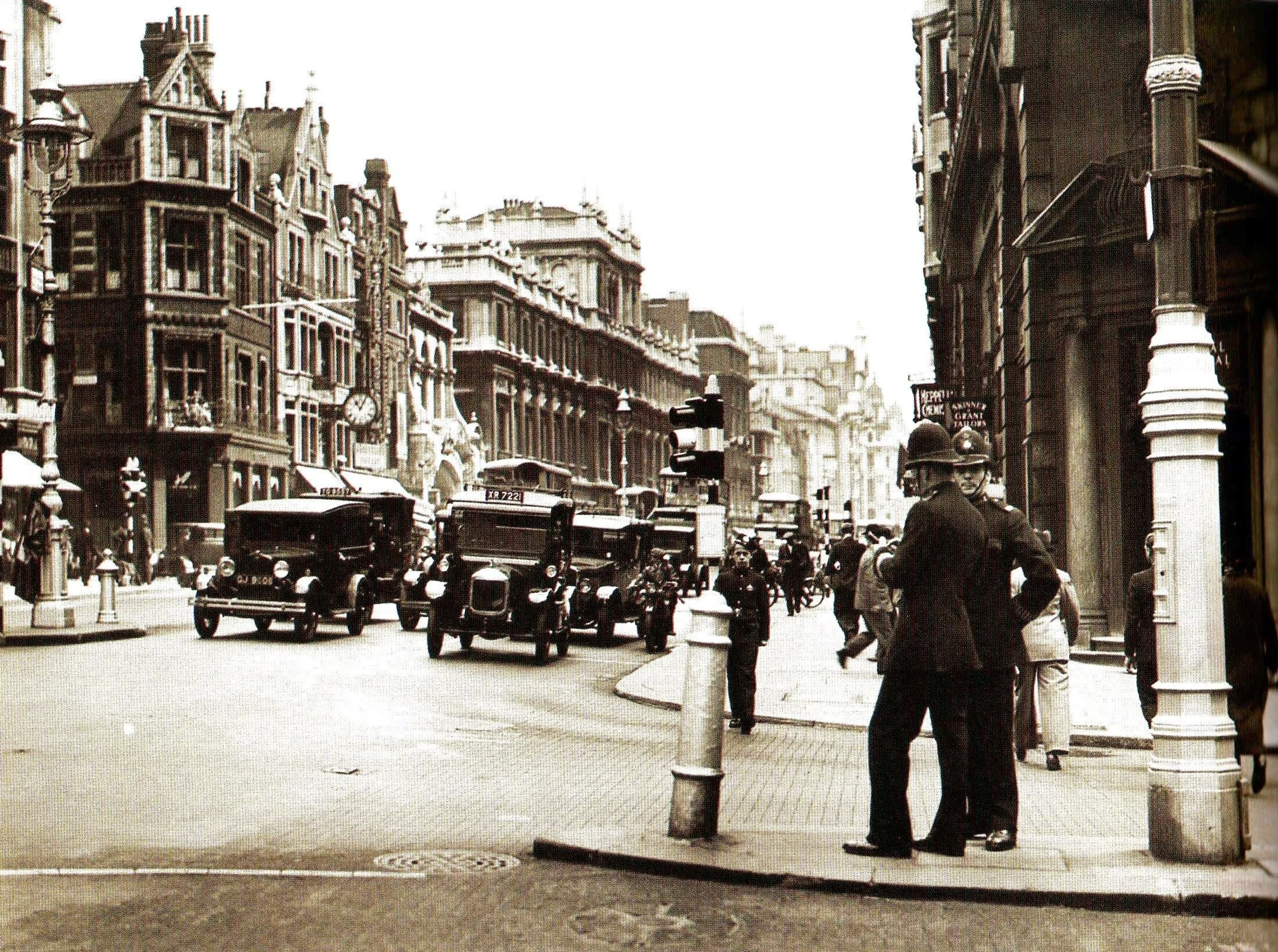
‘It would hardly be an exaggeration to claim that London is the chief protagonist of Woolf’s entire opus’, wrote David Bradshaw in 2012. If this is indeed the case, then The Years (1937), with its rich and detailed chronicle of the lives of the Pargiter family over three generations, also deserves to be seen as a biography of London from 1880 until ‘The Present Day’. It’s a novel which teems with signs of history in the making: the sights, sounds, feel and lure of the city, as seen from the windows of Abercorn Terrace, from the upstairs of a London bus, or from the perspective of a little girl who ventures boldly down to the local shop, and runs home in disgust and terror.
Representing London had long been a literary and artistic genre in itself when Woolf started work on the novel. but while the novel acknowledges the conventions of Wordsworth’s ‘moving pageant’, Mayhew’s ‘strange incongruous chaos of wealth and want’, Flora Tristan’s ‘Monster City’ and Dickens’ ‘great heart …in its Giant breast…, that nothing moves, nor stops, nor quickens’, Woolf’s London streets are always slightly different. It’s the sprawling hub of a giant empire, but it’s also an intimately familiar, tenderly loved home. ‘What shall I think of that’s liberating and freshening,’ she wonders in her diary on 29 March 1940, as the phony war and phony peace dragged on mercilessly. ‘The river. Say the Thames at London Bridge ; & buying a notebook ; & then walking along the Strand & letting each face give me a buffet.’
These are some of the many facets of London’s complex history, as played out on the city’s streets in The Years, that this lecture explores: the slow processes of decline as the metropolis of the world’s first industrial nation in 1880 becomes a vulnerable, anxious city on the fringe of Europe in the early 30s; the powerhouse of patriarchy and privilege being gradually undermined by new generations of economically and politically empowered women; shifts in wealth that favoured emerging consumer culture but also urban reform and public welfare: public transport, improved housing, street lighting, health and hygiene.
Live online lecture and seminar with Claire Davison, University of the Sorbonne, Paris.
Quotations taken from:
• David Bradshaw, ‘Woolf’s London and London’s Woolf’, in Jane Goldman and Bryony Randall, Virginia Woolf in Context, 2012.
• William Wordswoth, The Prelude, Book VII, 1805.
• Henry Mayhew, ‘Labour and the Poor: The Metropolitan Districts’, 1849.
• Flora Tristan, London Journal 1840.
• Charles Dickens, Master Humphries’ Clock, 1841.
• Virginia Woolf, The Diary of Virginia Woolf in Five Volumes, Volume 5.
Saturday 19 September 2026
18.00-20.00 British Summer Time
19.00-21.00 Central European Summer Time
Morning or lunchtime in the Americas
This session has sold out, but you can book access to the lecture recording, below. This will be available for 48 hours from about 10.00 pm UK time on 19 September. The is the lecture only; the seminar is not recorded.
Prices
£33.00 full price. SOLD OUT
£28.00 CAMcard holders. SOLD OUT
£28.00 Members of the VWSGB. SOLD OUT
£28.00 Students on a low income. SOLD OUT
£30.00 Access to recording: lecture only, seminar not included.
‘It would hardly be an exaggeration to claim that London is the chief protagonist of Woolf’s entire opus’, wrote David Bradshaw in 2012. If this is indeed the case, then The Years (1937), with its rich and detailed chronicle of the lives of the Pargiter family over three generations, also deserves to be seen as a biography of London from 1880 until ‘The Present Day’. It’s a novel which teems with signs of history in the making: the sights, sounds, feel and lure of the city, as seen from the windows of Abercorn Terrace, from the upstairs of a London bus, or from the perspective of a little girl who ventures boldly down to the local shop, and runs home in disgust and terror.
Representing London had long been a literary and artistic genre in itself when Woolf started work on the novel. but while the novel acknowledges the conventions of Wordsworth’s ‘moving pageant’, Mayhew’s ‘strange incongruous chaos of wealth and want’, Flora Tristan’s ‘Monster City’ and Dickens’ ‘great heart …in its Giant breast…, that nothing moves, nor stops, nor quickens’, Woolf’s London streets are always slightly different. It’s the sprawling hub of a giant empire, but it’s also an intimately familiar, tenderly loved home. ‘What shall I think of that’s liberating and freshening,’ she wonders in her diary on 29 March 1940, as the phony war and phony peace dragged on mercilessly. ‘The river. Say the Thames at London Bridge ; & buying a notebook ; & then walking along the Strand & letting each face give me a buffet.’
These are some of the many facets of London’s complex history, as played out on the city’s streets in The Years, that this lecture explores: the slow processes of decline as the metropolis of the world’s first industrial nation in 1880 becomes a vulnerable, anxious city on the fringe of Europe in the early 30s; the powerhouse of patriarchy and privilege being gradually undermined by new generations of economically and politically empowered women; shifts in wealth that favoured emerging consumer culture but also urban reform and public welfare: public transport, improved housing, street lighting, health and hygiene.
Live online lecture and seminar with Claire Davison, University of the Sorbonne, Paris.
Quotations taken from:
• David Bradshaw, ‘Woolf’s London and London’s Woolf’, in Jane Goldman and Bryony Randall, Virginia Woolf in Context, 2012.
• William Wordswoth, The Prelude, Book VII, 1805.
• Henry Mayhew, ‘Labour and the Poor: The Metropolitan Districts’, 1849.
• Flora Tristan, London Journal 1840.
• Charles Dickens, Master Humphries’ Clock, 1841.
• Virginia Woolf, The Diary of Virginia Woolf in Five Volumes, Volume 5.
Saturday 19 September 2026
18.00-20.00 British Summer Time
19.00-21.00 Central European Summer Time
Morning or lunchtime in the Americas
This session has sold out, but you can book access to the lecture recording, below. This will be available for 48 hours from about 10.00 pm UK time on 19 September. The is the lecture only; the seminar is not recorded.
Prices
£33.00 full price. SOLD OUT
£28.00 CAMcard holders. SOLD OUT
£28.00 Members of the VWSGB. SOLD OUT
£28.00 Students on a low income. SOLD OUT
£30.00 Access to recording: lecture only, seminar not included.