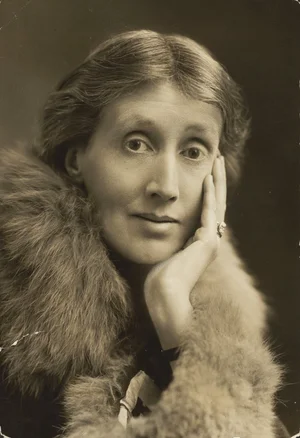
Katherine Mansfield, Complete
The Edinburgh Edition Comes to Paperback
Gerri Kimber writes about the Edinburgh edition of the writings of Katherine Mansfield, the complete scholarly edition of KM’s work. We are delighted to learn that these wonderful books are about to be published in paperback.
There are certain projects that quietly reshape the way a writer is read, and I had the great good fortune to spend the better part of a decade on one of them. This month (July 2026), all four volumes of The Edinburgh Edition of the Collected Works of Katherine Mansfield – which I edited as Series Editor, alongside a wonderful team of co-editors – are available in paperback for the first time. It feels like the right moment to reflect on what this edition actually is, and why I think it matters.
When we began the project, the received wisdom on Mansfield’s fiction was that we already had the ‘definitive’ collection: a volume of 85 stories, assembled decades earlier, that most readers and even most scholars took to be the whole picture. In 1984, Antony Alpers produced The Stories of Katherine Mansfield – Definitive Edition – except it wasn’t. It was certainly larger than anything that had gone before, but was still a personal selection, omitting stories that he personally disliked, and it was also hard to come by. It was only with Volumes 1 and 2 of the Edinburgh Edition – co-edited with Vincent O’Sullivan – which finally brought all of Mansfield’s fiction together – 220 stories and fragments – arranged chronologically, so that a reader can trace the writer’s development month by month, from a schoolgirl story written in 1898 to the last complete story she finished in July 1922. Reading her this way, in sequence rather than in the shuffled, best-of arrangement of earlier collections, changes how you see her. The false starts, the recurring images she kept returning to and refining, the sudden leaps in confidence – all of it is visible in a way it never was before. Vol. 1 Mansfield, Collected Fiction, 1898-1915. Vol. 2 Mansfield, Collected Fiction, 1916-1922.
Volume 3, co-edited with Angela Smith, does something no previous edition had attempted: it treats Mansfield as a critic, translator and poet in her own right, not simply as a short story writer with occasional other interests: The Poetry and Critical Writings of KM. Nearly 200 poems appear together for the first time, alongside her literary translations and her often very funny, occasionally scorching reviews and parodies of the fiction of her day. She was a formidable reader of other people’s work, and I think this volume does more than any other to correct the lopsided idea of her as a one-genre writer.
Volume 4, co-edited with Claire Davison, presents her diaries and notebooks unexpurgated and in proper chronological order for the first time – no small undertaking, given how scattered and fragmentary the surviving notebooks and loose sheets of paper are, and how much editorial interference earlier published versions had quietly imposed on her voice.
Taken together, the four volumes amount to almost 2,240 pages: everything Mansfield wrote, aside from her letters, which have their own separate four-volume edition (a project I was equally lucky to co-edit with Claire Davison). Every volume is annotated and indexed for scholarly use – but I hope the annotation never gets in the way of simply reading her, because that has always been the real point.
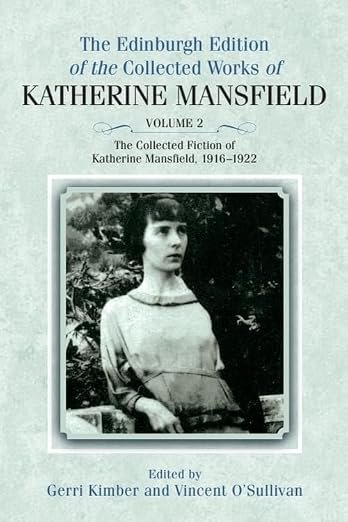
What has struck me most, going back over this work now that it exists in a more affordable, more portable form, is how much a Collected Works can do to correct the record on a writer who died at thirty-four, having published only a handful of slim volumes in her lifetime. Mansfield has often been treated as a miniaturist – brilliant but narrow. These four volumes make the case, I think conclusively, that she was nothing of the kind: a restless, formally adventurous writer working simultaneously in fiction, poetry, criticism, translation and the diary form, right up until the last months of her life.
The paperback edition means this material is, for the first time, within easy reach of students, general readers, and anyone who has only ever encountered Mansfield through a handful of anthologised stories. I couldn’t be happier to see it out in the world in this form, and I hope it sends readers back to her – all of her – with fresh eyes.
Gerri Kimber, author and editor of many books about Katherine Mansfield, and lecturer on our Katherine Mansfield courses.
Gerri will teach on our next Mansfield course: Katherine Mansfield: Place and Displacement. This takes place live online, March-April 2027.