On Woolf and the Natural World: Live Online
Mary Gardner writes about the 2026 Live Online Summer Course
‘I think that gives exactly what I want; humanity, humour, depth.’
–The Diary of Virginia Woolf, 30 August 1923
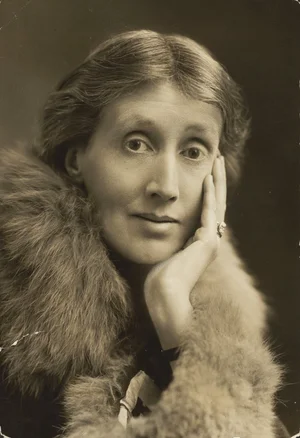
In describing my experience of Literature Cambridge’s 2026 Summer Course Virginia Woolf and the Natural World, I worry I will lack the gravitas this course merits. I might, instead, sound like a breathless fangirl writing in her diary rather than a woman of a certain age with years of reading Woolf under her belt. However, this course—with its illustrious team of scholar-lecturers, lively tutorial sessions, and rich offering of academic resources—stirred in me a fresh level of excitement on par with just such a fan.
Over the course of five days, we explored Woolf’s dynamic use of the natural world in five of her novels: Jacob’s Room, To the Lighthouse, The Years, The Waves, and Between the Acts. Each lecture and discussion was immensely stimulating, generative, and, given the current seismic changes in the natural world, poignant. Several of the additional talks on related topics (such as Harriet Baker on nature writing in Woolf’s Asheham Diary and Bonnie Lander Johnson on Britain’s Vanishing Landscapes) were by authors whose books I had read and admired. Listening to these authors in real time, engaging in post-lecture Q & A sessions, conjured the living voice from the written page, a fan’s delight.
I first attended the Woolf online summer course in 2025. Initially, I wondered if I would be able to attend these online sessions. I live in California on Pacific Standard Time; the lectures and tutorials are scheduled for British Summer Time. However, the course format and schedule easily accommodated the time difference. Pre-recorded lectures on the five selected works allowed participants from different time zones ample time to view them before their supervisions—and, for this inveterate notetaker, a chance to pause, reflect, and take notes as she watched. The additional talks were also recorded. For those, however, I chose to log on to Zoom at an early hour, coffee and notepad by my side, happy to be part of this live experience. While it is a long flight over the Atlantic for me, the online Summer Course was an easy click away.
The participants came from a wide range of locations, backgrounds, and professions. Some were, like me, more common reader than professional researcher. Others were professors and scholars of literature. And, to my delight, still others came from professions not specifically literary, but who, because of this difference, contributed some of the most energizing and insightful observations of the week. In my own small group, my companions leavened the conversation with references to Henri Bergson and neuropsychology, Thomas Hardy and the Victorians, recent and ancient history.
Alison Hennegan led my small-group’s supervisions with a rich respect for the complex humanity of not only the literature but also the participants, infusing her far-reaching scholarship with warmth, vitality, fairmindedness, and, yes, reminders of the foundational pleasures of being a reader. Her guidance provided us with references and insights for months, if not years, of additional reading and research that I cannot wait to begin.
This course, like Woolf’s epiphany when writing The Hours (later titled Mrs Dalloway), renewed my sense of the ‘humanity, humour, depth’ in her work and its transformative power when brought into conversation with others. Consider this review then as a note in my diary: Do not miss 2027’s Woolf Season, Woolf and History. Calendar it now. Needless to say, I anticipate that course, too, with breathless excitement.
Mary Gardner
Sonoma County, California, 2026