Odysseus and Storytelling
Owning and Losing one’s Own Story
About The Odyssey
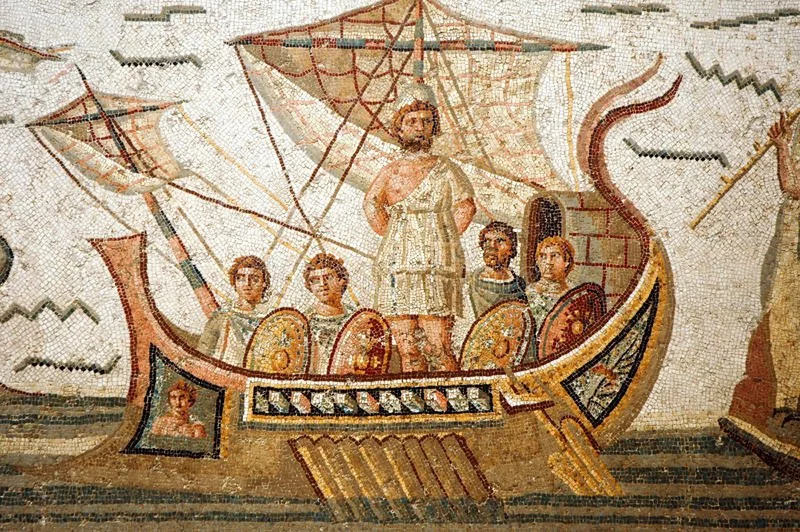
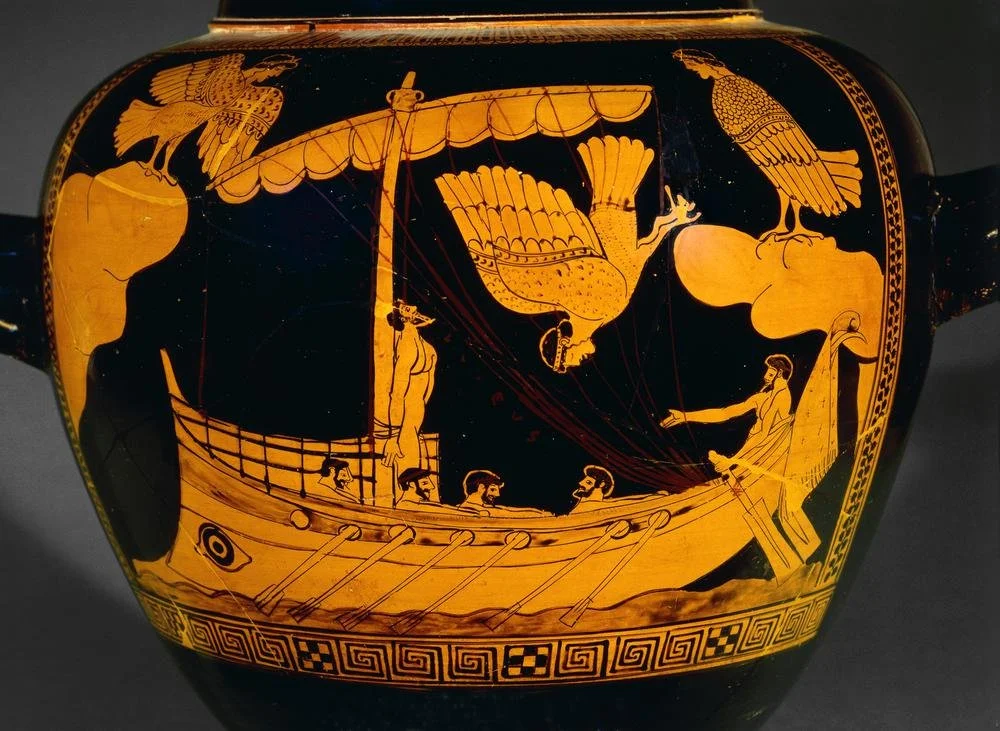
The Odyssey, the second of the epic texts attributed to Homer, and also a major founding work of European literature, is usually dated to around the 8th century BC. It is an epic poem, effectively a sequel to The Iliad, written in Ancient Greek but assumed to be derived from earlier oral sources, telling the story of Odysseus’ wanderings and his eventual return from the Trojan War to his home island of Ithaca.
The cultural background to the poem indicates a Bronze Age setting around 400 to 500 years before the Homeric literary period itself. The poem contains elements of myth and legend as well as sheer literary invention, and covers the ten years of its hero’s adventures from the destruction of Troy to his return to his wife Penelope and son Telemachus.
Of particular interest is the role of women in the Bronze Age culture described, represented in a sense by Odysseus’ guardian deity, Athene, the goddess of mind. Odysseus is an archetype of the person of intellect who uses brains and eloquence rather than brawn to outwit opponents and impress peers, and therefore sets the scene for later Greek Classical culture.
Source: Poetry in Translation website.
Odysseus and Storytelling: Owning and Losing Their Own Stories in the Odyssey:
Circe, Calypso, Nausicaa, Penelope and Odysseus
From stories told by men and women for millennia of the heroes and victims of the iconic ?13th century BCE Trojan War and Odysseus' adventures and return, ‘Homer’ – or the bardic tradition - crafted the Iliad and the Odyssey, the foundations of Greek literature and much later literature, too.
But whereas in the Iliad Homer tells Achilles’ and others’ stories, many of the most memorable accounts of the gracious or monstrous hosts Odysseus encounters are told – crafted, shaped - by Odysseus himself. When Odysseus moves on from Calypso, Circe or Princess Nausicaa on Phaeacia, where he sings like a bard for his supper, their stories end. But these figures had stories of their own told in other epic cycles (such as Circe’s in the Telegony) or showing through Odysseus’ envoicings or disenvoicings.
This course will explore the many-sided character of Odysseus, which has fascinated later poets and writers, from the Greek tragedians through to Dante, Tennyson, Kazantzakis, James Joyce, and so many more: both as consummate storyteller, shimmering variously, delighting all with his adventures among nymphs, goddesses and monsters. And we will explore the ways in which Homer has given us those great female characters’ own stories.
And look at what happens when Odysseus the Storyteller has to leave the world of stories to return to ‘rocky Ithaca, good for goats’ to become the returning head of the household, father, son, and husband to those he left so long ago. And to meet and come to terms with Penelope, whose own story Homer so wonderfully brings us, who tests him and his [?assumed ] non-heroic identity, asking who is he now?
So, I will be arguing that the most fascinating, multifaceted and problematising take on this character is not the 'greatest hero' played by Matt Damon in the upcoming Christopher Nolan film, nor Ralph Fiennes' 2025 war-damaged soldier but, I want to argue, Penelope and Homer's own.
Join us for Odysseus and Storytelling: Live Online Course with Dr Jan Parker
Wednesdays, weekly, 6 May to 20 May 2026.
18.00-20.00 British Summer Time
19.00-21.00 Central European Summer Time
Morning or lunchtime in the Americas
Lecture list
Lecture 1. Penelope’s Ithaca, Helen’s Sparta and Odysseus’ final hosts: Queen Arete, Princess Nausicaa on Phaeacia. Odyssey, Books 4, 6, 7
Lecture 2 Odysseus as bard: storying the world of his travels, storying other women, human and magic. Odyssey, Books 5, 9-12
Lecture 3 Return to Ithaca: Penelope’s story … and aftermath. Odyssey, Books 19-24
Set Reading
Homer, The Odyssey (Oxford World’s Classics, 2018) or on the Poetry in Translation website, trans. A. S. Kline (2004). You can also buy a printed or audio version of this translation from Poetry in Translation.
Links
Article on archeological discovery of possible sanctuary to Odysseus on Ithaca, April 2026.
Jan Parker, 'The Hero Returns’ in ARGO: The Hellenic Journal (October 2025).
Jan Parker, Odysseus, Trauma and Identity in Antigone Journal.
Course Fees (all include VAT at 20%)
£130.00 Full price
£115.00 CAMcard holder
£115.00 student or pensioner on a low income
Dr Jan Parker is a Senior Member of the Faculty of English, University of Cambridge. Her latest book is The Iliad and Odyssey: The Trojan War, Tragedy and Aftermath (London, 2021). See her Blog post about this course on our Blog page.
To book, please click on the image below.