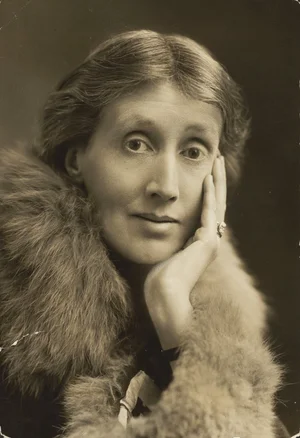
The Weather in History: The Years (1937)
Virginia Woolf and the Natural World
Summer Course 2026
Virginia Woolf’s late novel, The Years (1937), is divided into unnumbered chapters, each set in a particular year: 1880, 1891, 1907, etc. The book is a remarkable history of Woolf’s lifetime. Each section begins with a description of the time of day, the season, the weather, the natural world.
For example, the 1891 chapter opens in London, in autumn:
The autumn wind blew over England. It twitched the leaves off the trees, and down they fluttered, spotted red and yellow, or sent them floating, flaunting in wide curves before they settled. In towns coming in gusts round the corners, the wind blew here a hat off; there lifted a veil high above a woman's head. Money was in brisk circulation. The streets were crowded. Upon the sloping desks of the offices near St Paul’s, clerks paused with their pens on the ruled page. It was difficult to work after the holidays. Margate, Eastbourne and Brighton had bronzed them and tanned them.
The 1911 chapter, by contrast, opens in high summer in the south of France:
The sun was rising. Very slowly it came up over the horizon shaking out light. But the sky was so vast, so cloudless, that to fill it with light took time. Very gradually the clouds turned blue; leaves on forest trees sparkled; down below a flower shone; eyes of beasts – tigers, monkeys, birds – sparkled. Slowly the world emerged from darkness. The sea became like the skin of an innumerable scaled fish, glittering gold. Here in the South of France the furrowed vineyards caught the light; the little vines turned purple and yellow; and the sun coming through the slats of the blinds striped the white walls.
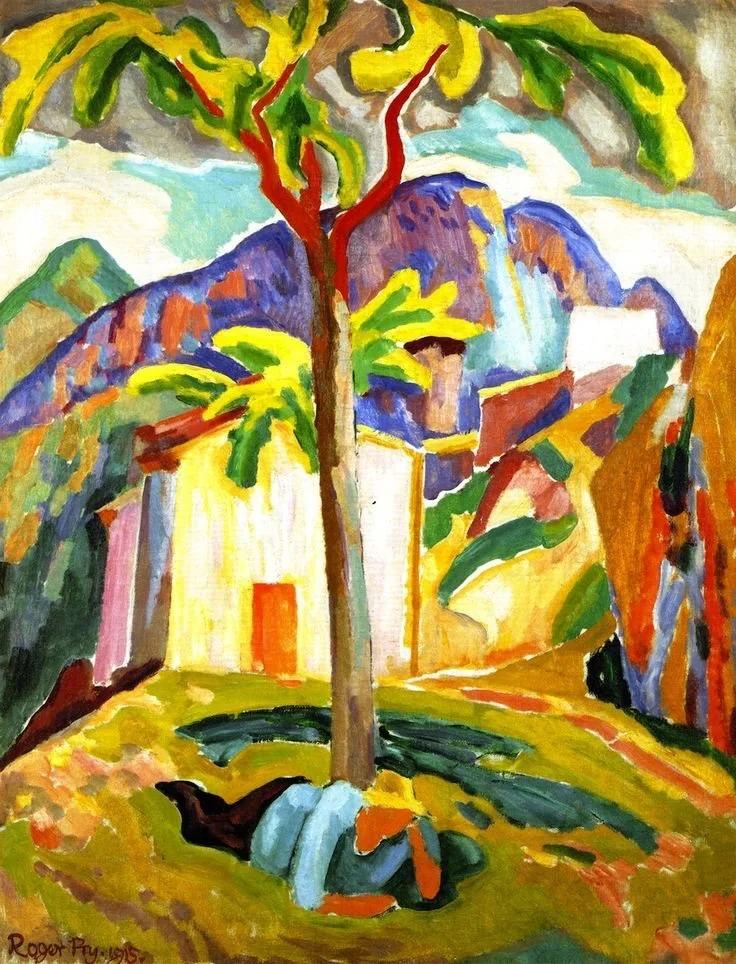
Roger Fry, South of France
What do these lyrical descriptions mean? Why does Woolf approach the history of her own time through nature, especially the seasons and the weather?
Now, in the time of climate change, we see weather as historical, affected in part by human activities, with damaging consequences for humans, agriculture, and the natural world. How does the climate look to Woolf in the 1930s? How does she see the weather in history?
Trudi Tate will explore these questions and more in her lecture on The Years in our 2026 summer course on Woolf and the Natural World.
Lectures
• Alison Hennegan, Women and Nature in Jacob’s Room (1922)
• Karina Jakubowicz, The Artist’s Garden in To the Lighthouse (1927)
• Kate Eliot, Land, Sea and Sky in The Waves (1931)
• Trudi Tate, The Weather in History: The Years (1937)
• Ellie Mitchell, Earth and Sky in Between the Acts (1941)
Plus small group supervisions (tutorials), talks, discussions, and more. Go to the webpages (links below) for further details.
The course will run twice. First, live online, Thursday 9 to Monday 13 July 2026 (includes a weekend). Then in person in Cambridge, 2-7 August 2026.
Do join us.