Homelands
Black British writers of the mid-20thC
Black British Writers of the Mid-Twentieth Century
1930s-1970s
Live online course with Dr Hannah Hutchings-Georgiou
What does it mean to belong? Where is home when your native country is subject to another? Is the motherland the place of your birth or that which exists in a colder climate, on a greyer island, where a young monarch rules both? And is it possible to be a citizen of two worlds, two lands, whose boundaries exceed the seas that separate them? Homelands considers these questions through the works of five renowned Black British authors of the mid-twentieth century.
We will study the fiction of C. L. R. James, Sam Selvon, Wilson Harris and Buchi Emecheta, as well as the memoir of Beryl Gilroy, exploring questions about diasporic identities and experiences. We will study the often innovative forms and styles each author employs to describe and represent those experiences. Whether looking back to their native countries like Guiana, Trinidad or Nigeria, or forward to Britain to reimagine lives displaced and emplaced again, each author asks what makes a homeland and a community, and what creates a personal as well as national sense of belonging.
These books explore issues which are still important today: migration and citizenship, globalisation and cosmopolitanism. Drawing upon some postcolonial criticism and decolonial theories, Homelands will consider how each book thinks about what it means to be a Black British author working in mid-twentieth-century Britain.
Thursdays, fortnightly, 23 September to 18 November 2027
Lecture list
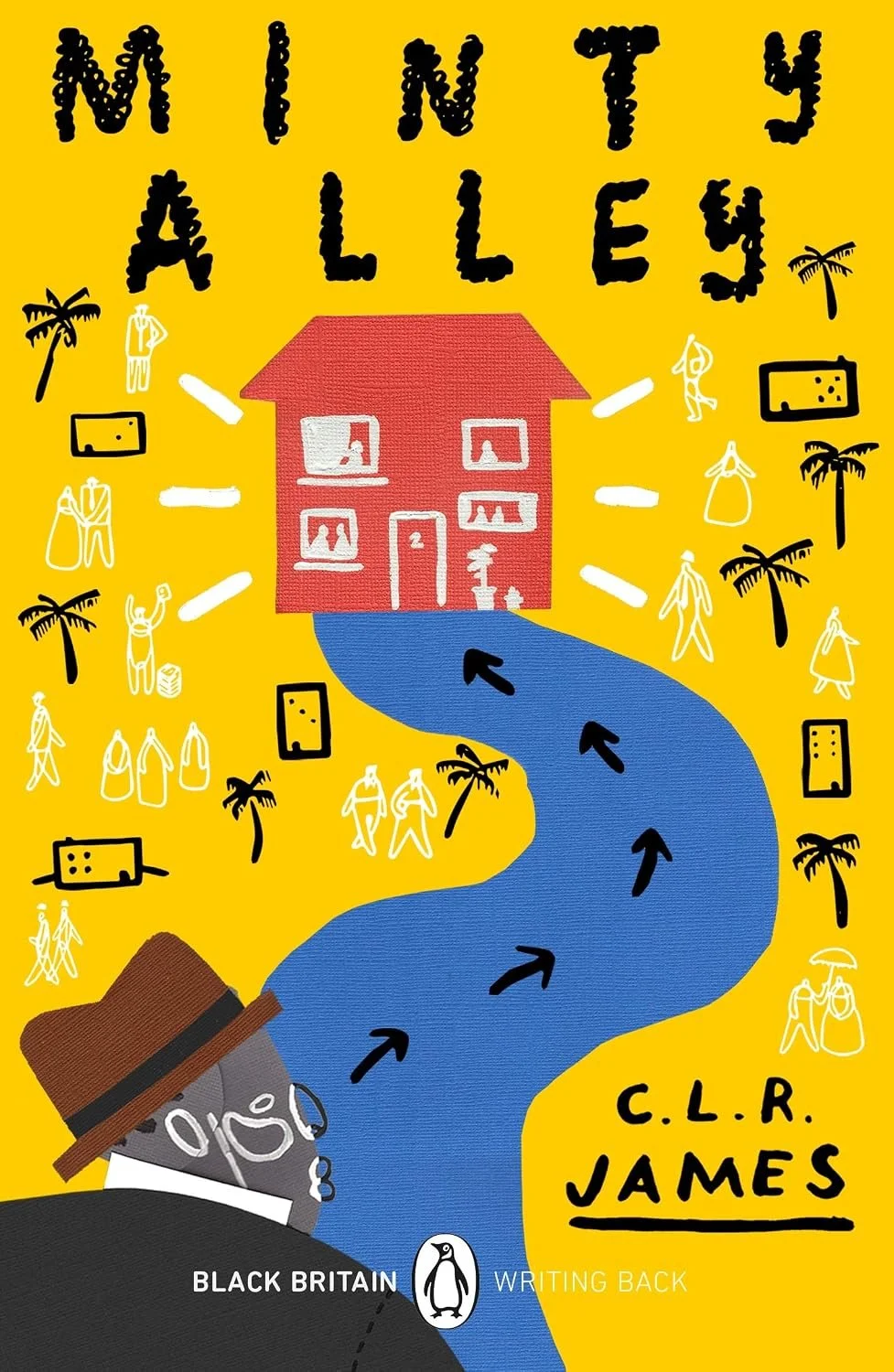
Lecture 1. C. L. R. James, Minty Alley (1936)
Lecture 2. Sam Selvon, The Lonely Londoners (1956)
Lecture 3. Wilson Harris, Black Marsden (1972)
Lecture 4. Buchi Emecheta, Second-Class Citizen (1974)
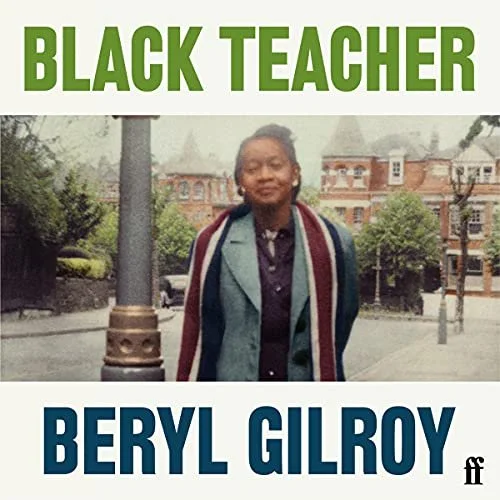
Lecture 5. Beryl Gilroy, Black Teacher (1974)
Each session has a 1-hour lecture, followed by a seminar / moderated Q+A.
Further details of lectures
Week 1. Minty Alley (1936) by C. L. R. James
C. L. R. James was a socialist, political activist, journalist, and author of plays, novels, and non-fiction. Born in Trinidad, James migrated to England in the 1930s, becoming a sports journalist for the Manchester Guardian and a significant proponent of Marxist ideas and movements in Britain. He was published by Leonard and Virginia Woolf’s Hogarth Press in 1932 and his debut novel, Minty Alley, was published in 1936 to little critical acclaim. James is best known for his history of the Haitian revolution, The Black Jacobins (1938). However, James’ novel, which was the first of its kind to be published by a Black man from the Caribbean in England, is hugely important, and paved the way for other Caribbean writers. This lecture will consider the influence of James’ Marxist ideas on the novel’s depiction of class, community and collectivity in Trinidad. It will also reflect on James’ legacy in Britain, why storytelling was key to his writing, irrespective of genre and form, and why James looked back to this island when living in 1930s Britain.
Week 2. The Lonely Londoners (1956) by Sam Selvon
Sam Selvon is part of the esteemed group of Windrush-era writers from the Caribbean – George Lamming, Wilson Harris, V. S. Naipaul, Andrew Salkey, among others – who had success with their writing and helped to shape the literary landscape of their times and beyond. Selvon’s classic, The Lonely Londoners (1956) begins his London fiction series and continues to command critical and readerly interest. It has become the novel celebrating migrant experience, community and creativity in 1950s Britain. But, in its depiction of the English public, its remapping of the capital, its creative rewriting of Trinidadian vernacular and the multiple escapades enjoyed by its irrepressible characters, The Lonely Londoners also challenges the lingering presence and power of British colonialism, as Selvon’s London is rebuilt through the eyes and actions of its Caribbean inhabitants. Looking at his depiction of London and its burgeoning migrant community, we can see the notions of home and belonging redefined.
Week 3. Black Marsden (1972) by Wilson Harris
Wilson Harris is best known for the magical and transcendent novels that form The Guyana Quartet, in which he captured the visionary and poetic possibilities of Guiana. But his little known but brilliant novella, Black Marsden (1972), displaces the magic of the Guianese forest onto a cold and windy Edinburgh. Merging spaces and dialects, the titular doctor with shamanic tendencies, the novella transposes the rich cultural and geographical spaces of one world onto another, and charts the creative and personal development of this singular author.
Week 4. Second-Class Citizen (1974) by Buchi Emecheta
Published by the first Black British publisher, Margaret Busby (of Allison and Busby), Second Class Citizen (1974) is inspired by Buchi Emecheta’s own marriage and move from Nigeria to England in the 1960s. The book is written with an unflinching eye on the domestic drudgery and coldness of her own marital relationship, as well as the racism her fictional counterpart, Adah, encounters all around. Second Class Citizen rises up against all such hostilities and systemic injustices by revealing its heroine to be fiercely resilient and determined to make her own way. Preceded by In the Ditch, an earlier novella derived from Emecheta’s The New Statesman column about her own life, Second Class Citizen rewrites her earlier difficulties with a more empowering outlook, paving the way for future publishing success for the author and deeper discussions about Black motherhood in the African diaspora. This lecture will explore the matriarchal and maternal home Emecheta builds for herself in Britain, and the foundation this creates for her both personally and professionally.
Week 5. Black Teacher (1974) by Beryl Gilroy
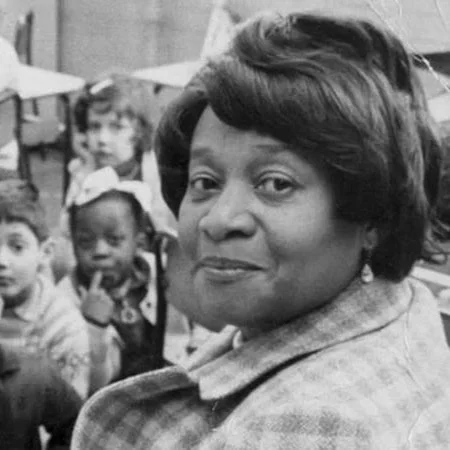
A writer of poetry, essays and fiction, Beryl Gilroy wrote to educate as much to entertain her readers. Before moving to England from British Guiana in 1952, Gilroy was already a fully trained and experienced teacher. Despite this and her subsequent study of child development at the University of London, Gilroy was denied teaching positions because of the colour bar. Black Teacher (1974) details all this and her eventual rise to being the first Black headteacher in Camden in 1969. But the memoir goes beyond Gilroy’s role as an educator to detail her life as a Caribbean migrant living in post-war London. Looking at extracts of her early fictional and didactic works alongside this memoir, we will consider how Gilroy navigated British institutions and the streets of London as a woman, wife and mother, to build a fierce legacy as a pioneering teacher and writer.
Dates
Thursdays, fortnightly, 23 September to 18 November 2027
18.00-20.00 British Time (please note that the clocks change from Summer Time to GMT at the end of October)
19.00-21.00 Central European Time
Morning or lunchtime in the Americas
Course Fees
£260.00 full price
£230.00 CAMcard holders
£230.00 students or pensioners on a low income
Fees include 20% VAT
Zoom link
We will send you a Zoom link by email at least 24 hours before the course begins. If the link does not arrive, please let us know by email in good time, at least an hour before the session begins, so we can re-send.
Recordings
This is a 5-week course, with a live online lecture and seminar each week. The lectures are recorded so that participants can listen again during the course if they wish. The seminars are not recorded.
If you cannot attend a course you have booked
Please note that, because places are limited, we cannot usually give refunds if you cannot attend a course. But if you contact us in advance, we might be able to transfer your booking to a different course.
To book, please click on the image below.