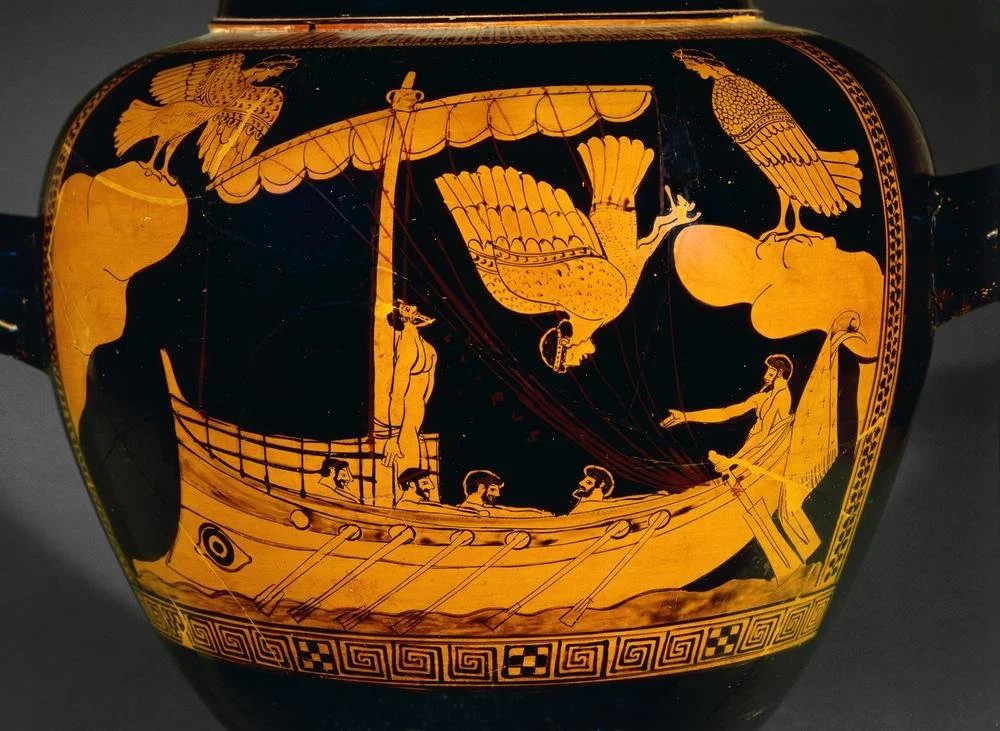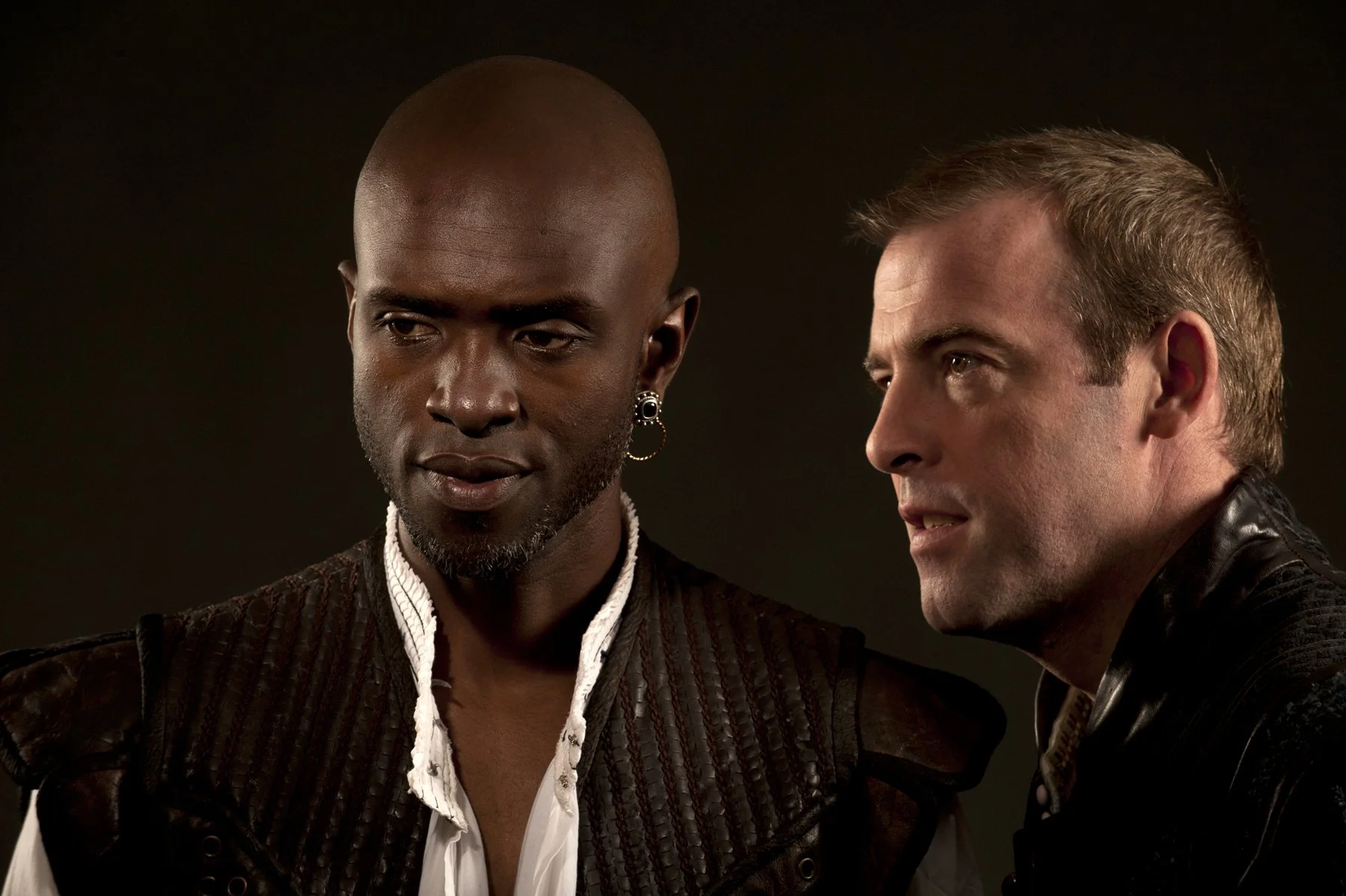
Homer and shakespeare 2027
Stories of the heroic world and its survival
in Homer and in Shakespeare
Agamemnon as Darth Vader, Matt Damon and Ralph Fiennes' blood-guilty Odysseus: there have been strange images of Homer’s heroes on our screens lately.
Christopher Nolan’s film The Odyssey starts with two memorable images of Troy: a fabulous Mycenaean citadel and an archaeological relic: the horse rearing up from the sand. Both would recognisably represent ‘Troy’ to the Greeks of Homer’s audience; Troy as the site of heroic and sometimes terrible deeds, stories woven over the later 5 centuries or so into the coherent narrative that we have as the Iliad. And also into the companion epic which we have lost - Iliopersis, ‘The destruction of Troy’, which had the material drawn on by Greek tragedies like Euripides’ Trojan Women (and presumably the forthcoming Emma Thompson film of Pat Barker’s Silence of the Girls), imagining Troy as a place of ultra-masculinist rape and slaughter.
Neither the Iliad nor the Odyssey deals directly with the fall of Troy, concerned as both are with exploring two very different heroes: Achilles and Odysseus. But both heroes are seen against an elegiac backdrop - Troy as bound to fall and with it the passing of the age of heroes and the emergence of a new figure: an Odysseus who can deal with any and every situation, can turn even adversity to account.
In the Iliad there is a running reflection on, and sometimes direct critique of, the ‘heroic exchange’ of exertion and danger for glory and immortal fame; in the Odyssey a man whose experiences may have made him insensible of, or inured to, guilt and responsibility. Homer's epics reflect on manhood, the cost of war, women both as powerful and as victims, and the cost of returning to a post-war world.
In Shakespeare's Troilus and Cressida the heroes of the Iliad are living in a shabby post-heroic world, where value depends on how people regard you, and story of Troy can be reduced to ‘wars and lechery’. Shakespeare’s Odysseus (Ulysses) urges Achilles to ceaseless performance of heroic action, as the means of staving off the banality and squalor of ‘real life’ – a strategy that seems bound to fail. Such a strategic mindset – a shrunken version of Homer’s ever-resourceful Odysseus? – was recognised by Shakespeare’s audience as ‘machiavellian’ or ‘political’, a pragmatic modern consciousness that threatened icons of value belonging to the heroic realm: the majesty of kingship, or the magnificence of great love, or the prowess of the great warrior.
The conflict between these two visions is at the heart of the Shakespeare plays we shall explore. ‘Brightness falls from the air ... Dust hath closed Helen’s eye’, wrote Thomas Nashe, his contemporary, elegiacally – but Shakespeare explores, more urgently, what nevertheless survives of the heroic world.
Lecture list
• 23 February 2027. Jan Parker on Homer, the Iliad
• 2 March 2027. Jan Parker on Homer, the Odyssey
• 9 March 2027. Fred Parker on Shakespeare, Antony and Cleopatra
• 16 March 2027. Fred Parker on Shakespeare, Othello; Troilus and Cressida
Homer
Lecture 1. The Iliad
What is the value of war in the Iliad: why fight? As Sarpedon asks his second in command Glaukon. Achilles’ different answers are blown away by the death of his partner Patroklos, for whom he was responsible. The questions reach beyond the value of fighting to the value of being mortal.
Lecture 2. The Odyssey
Recent films have shown Odysseus’ return as one to a bleak, Dark Age world. But in that world, what else are the long, dark nights for except to transmute painful experience into storytelling? And the Odyssey is all about stories – those Odysseus tells, but also the motifs within which he acts: the return in disguise of the long absent Hero, Husband and Judge. But in the end, what kind of hero has he become?
Shakespeare
Lecture 3. Our main focus will be on Antony in Antony and Cleopatra, the ageing lover whom the god abandons, formerly a magnificent figure, perhaps still though differently magnificent in his decline, maybe even because of it. We shall also look at passages from Richard II and Coriolanus, characters committed to absolute values that cannot accommodate political reality. In what light does Shakespeare show the charisma of these figures?
Lecture 4. We begin with the key scene between Ulysses and Achilles in Troilus and Cressida: the versatile resourcefulness of Homer’s Odysseus becomes Ulysses’ corrosive questioning of all identity within the pressures of a surveillance state. Something of Ulysses is further developed into Iago; our main focus will be on Othello and Desdemona in Othello: figures with a claim to greatness larger than Iago’s cheapening vision can comprehend?
This four-week course is led by Cambridge scholars Dr Fred Parker and Dr Jan Parker. Tuesdays, 23 February to 16 March 2027, 6.00-8.00 pm UK time. Each session includes a 1-hour lecture, followed by a seminar. Live online.
Course fees (prices include 20% VAT)
£210 full price
£190 students on low income
£190 CAMcard holders
£105 Shakespeare lectures only
£105 Homer lectures only
Each session lasts from 6.00 pm to 8.00 pm British Time, live online. Please check the time in your time zone.
Recordings
This is a 4-week course, with a live online lecture and seminar each week. The lectures are recorded so that participants can listen again during the course if they wish. The seminars are not recorded.
To book, please click on the image below.